AI Explains Why a Post Failed: Fix the Cause, Not the Symptom
Ask Zoe why a post did badly and get the likely cause: the hook, the timing, the format, the topic or the picture. Then one fix to test, made for your yes.
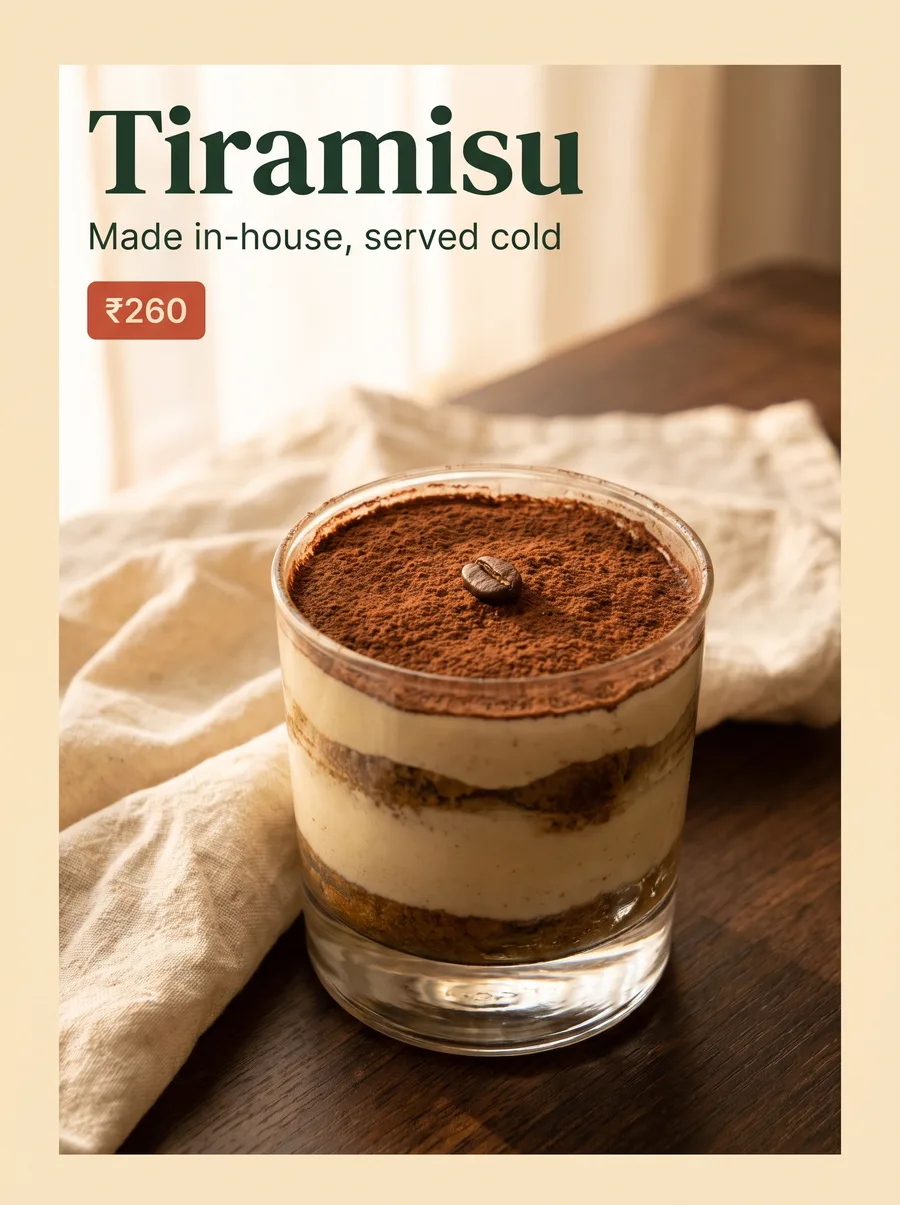
“Why did Tuesday’s tiramisu post do so badly?”Basil Bistro · Instagram
Compared it with your usual and similar postsAnalystUp next
Checked hook, timing, format, topic and visualAnalystUp next
A new first lineCopywriterUp next
Approve the fixYouUp next
Schedule the new versionPublisherUp next
The likely cause and the fix
Being made
Tiramisu, Tue 3 Nov
Engagement 38% of your usual after 24 hours
TimingPosted at 11:40 PM. Your followers are most active 4 to 8 PM.
HookThe caption opened with “Hello foodies!”
VisualClear photo with the price on it
The fix
A new version on Thu 12 Nov at 4:00 PM, opening with “Made in-house, served cold. ₹260.”
Zoe’s team on a weak post
Fix the cause, not the symptom
The checks
Seven checks, one likely cause
The Analyst compares the post with your average and similar posts, then checks the hook, timing, format, topic, visual, call to action and platform fit.
Seven checks
Against similar posts
One likely cause
Analyst
Reads your numbers, writes your reports
On it
Analystchecked your Monday LinkedIn post
HookOpened with a greeting, not a point
TimingWent out at 11 PM
Format
Topic
Visual
Call to action
Platform fit
Similar posts at 9 AM did 3 times better
Likely cause: the time it went up
Analyst · said as likely, not as fact
Analyst
Reads your numbers, writes your reports
On it
Analystchecked your Monday LinkedIn post
HookOpened with a greeting, not a point
TimingWent out at 11 PM
Format
Topic
Visual
Call to action
Platform fit
Similar posts at 9 AM did 3 times better
The fix
One fix to test at a time
Each cause comes with one change: a new first line, a better time, a carousel instead of one image, or a clearer photo. Zoe makes it once you approve.
A new first line
A better time
You approve
Copywriter
Writes captions in your voice
On it
Copywriterrewrote the first line
Before
Hello foodies! Hope you are having a great week.
After
Made in-house, served cold. ₹260.
Thu 12 Nov, 4:00 PM
Publisher · only after your yes
Copywriter
Writes captions in your voice
On it
Copywriterrewrote the first line
Before
Hello foodies! Hope you are having a great week.
After
Made in-house, served cold. ₹260.
Lessons kept
Mistakes that turn into rules
A diagnosis can become a rule in your playbook, like “no posts after 10 PM” or “price on the image”. The Strategist and Quality lead apply it to every post after.
Rules in your playbook
Checked on new posts
Fewer repeat mistakes
Strategist
Plans what to post and when
On it
Strategistsuggested 2 rules from this month
No posts after 10 PMFrom the tiramisu post
Price on the image for every offerFrom the lunch offer post
Checked against your rules
Quality lead · every new post
Strategist
Plans what to post and when
On it
Strategistsuggested 2 rules from this month
No posts after 10 PMFrom the tiramisu post
Price on the image for every offerFrom the lunch offer post
What Zoe checks
The usual reasons a post falls flat
Each post is compared with your average and with similar posts.
Hook
Did the first line or first second give people a reason to stay?
Timing
Did it go up when your followers were active?
Format
Was a single image, carousel or Reel the right shape for the message?
Topic
Has your audience seen this topic too often lately?
Visual
Was the picture clear, real and readable on a phone?
Call to action and platform fit
Did it say what to do, in the way people use that platform?
The guide
Why a post failed: the complete guide
How the diagnosis works, examples, the fix for each cause, the most common causes and turning lessons into rules.
How Zoe Diagnoses a Post
The Analyst compares the post with your average and with similar posts, then checks the most common causes:
Hook: did the first line or first second earn attention?
Timing: was it posted when your audience was active?
Format: was it the right format for the message?
Topic: has your audience seen this topic too often recently?
Visual: was the image or video clear, real and on-brand?
Call to action: did it tell people what to do?
Platform fit: did it match how people use that platform?
Example Diagnosis
Question: "Why did our Monday LinkedIn post do so badly?"
Answer: "It went out at 11 PM, when your audience is inactive, and the first line was a general greeting rather than a point. Similar posts with a specific first line at 9 AM performed about three times better. Fix: repost on Wednesday at 9 AM with the first line 'Most GST notices come from one avoidable mistake.'" (Illustrative.)
From Diagnosis to Fix
Diagnosis
Fix Zoe makes
Weak hook
Rewrites the opening line or first second
Bad timing
Schedules a new version at a better time
Wrong format
Turns it into a carousel or Reel
Topic fatigue
Pauses the topic and tries a fresh angle
Poor visual
Swaps in a real photo or a clearer design
Who Uses It
Anyone who wants to learn from results instead of repeating mistakes, especially small teams without an analyst.
When a post underperforms, many people blame the algorithm or change everything at once: new hashtags, new times, new designs. That makes it impossible to know what helped. A structured diagnosis isolates the most likely cause, so you change one thing and learn from the result. Over time, you build a clear picture of what your audience responds to.
The Most Common Causes, Ranked
In practice, weak openings and poor timing explain a large share of underperforming posts. Topic fatigue is next, especially for brands that post the same type of offer repeatedly. Visual quality and format mismatch follow. Zoe checks each in turn and tells you which one most likely applies to your post.
Example: Restaurant Offer Post
Question: "Why did our weekday lunch offer get no response?"
Diagnosis: "The image was a menu card with small text, which is hard to read on a phone, and the offer was in the last line of the caption. Your best offer posts used a photo of the dish with the price in large text. Fix: a dish photo with 'Lunch combo ₹249' on the image and the offer in the first line." (Illustrative.)
Before and After
Before
After
Blaming the algorithm
A specific, testable cause
Changing many things at once
One fix at a time
Repeating the same mistakes
Patterns turned into rules
Turning Diagnoses Into Rules
Each diagnosis can become a rule in your brand playbook, such as "price on the image" or "no posts after 10 PM." Zoe's Strategist and Quality lead apply these rules to every post after, so the same mistake does not come back.
Getting Started
Pick your three weakest posts from last month and ask Zoe why each underperformed. Apply the suggested fix to your next similar post and compare results.
Tips
Give posts enough time before judging, compare with similar posts and keep a short list of lessons learned.
When the Cause Is Outside Your Content
Sometimes a post underperforms because of external events, such as a major cricket match, an election result or a public holiday. Zoe notes these when relevant, so you do not change a good format because of a bad day.
Rescue Weak Posts Automatically
Turn on the Rescue a weak post recipe and you do not even have to ask. When a post's engagement is below half of your usual 24 hours after posting, Zoe tells you why and what to change next time.
Tip
Test one fix at a time and note the result.
Learn from every weak post
Start the free trial, connect your accounts and ask Zoe about your three weakest posts.
It comes from your own numbers and the most common causes, so it names the most likely cause. Test the fix and you will know for sure.
Can Zoe apply the fix for me?
Yes, with your approval.
Does it work for ads?
Yes. Link your ad accounts and ask Zoe how any ad is doing: spend, reach, clicks, leads and sales on Meta, Google, LinkedIn, X and ChatGPT ads. Zoe can also run those campaigns for you. See Ads.